Erie County public records are official documents created, filed, or maintained by county government offices and made available to the public under state open records law. These records include court case files, property deeds, tax assessments, probate filings, meeting minutes, permits, and selected law enforcement reports. They exist in both paper and digital form, and many departments provide searchable databases through a public access portal. Public records support transparency, protect property rights, and document legal proceedings. They allow residents, businesses, journalists, and researchers to review how local agencies operate and how public funds are used across Erie County.
Erie County public records can be requested or searched by members of the public, subject to privacy limits set by law. Most property records, court dockets, and board resolutions remain open for public inspection, though agencies may redact confidential details such as Social Security numbers or sealed case information. A government records search may be completed online through department databases, by mailing a written request, or by visiting the appropriate county office in person. Some records require small copying or certification fees. By offering multiple request options, Erie County supports public review of government documents and promotes accountability across departments.
How to Search Erie County Public Records
Erie County public records can be searched online through the New York State Unified Court System WebCriminal portal. When using the Case Identifier Search page, users must select Erie County Court from the court dropdown menu to narrow results to Erie County. This method allows a direct public records search using a case number or summons number. It works best for locating official case summaries tied to Erie County Court.
Steps for Erie County Court Case Search by Name
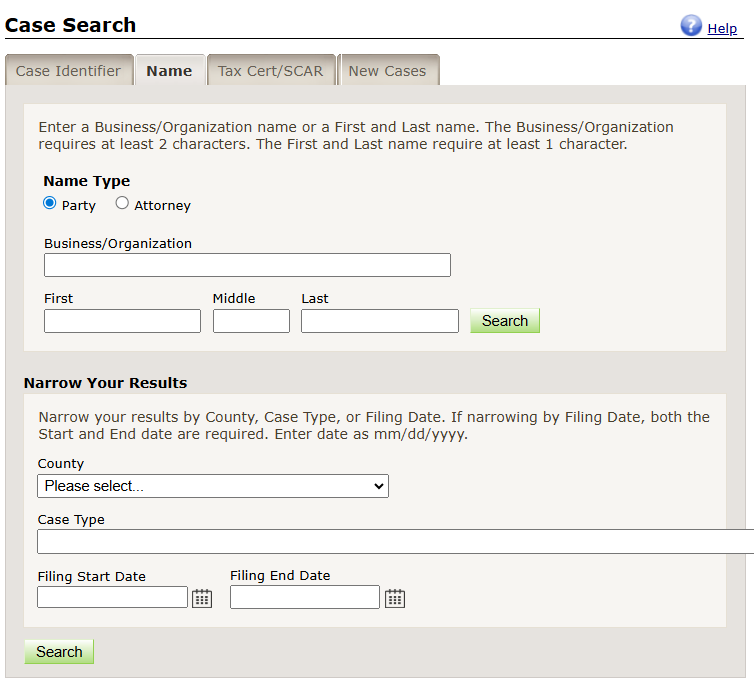
Searching Erie County Court records online is simple through the official New York State Courts Electronic Filing system. The NYSCEF Name Search tool allows users to find civil case records filed in Erie County by party name or attorney name. Official Name Search Portal: https://iapps.courts.state.ny.us/nyscef/CaseSearch?TAB=name
Follow these steps to perform an accurate Erie County Court case search:
Open the Official Case Search Page
Visit the NYSCEF Name Search page using the link above. The page will open with the “Name” tab selected.
Select the Name Type
Choose the option that matches your search need. You will see two search options:
- Party Name – Search by a person or business involved in the case
- Attorney Name – Search cases filed by a specific lawyer
Enter the Required Information
Accurate spelling improves search results. For best results:
- Enter the First Name and Last Name of the person
- For businesses, enter at least 2 characters of the company name
- Avoid extra spaces or punctuation
Filter for Erie County
Filtering reduces unrelated results and improves accuracy. To narrow your results:
- Select Erie County from the County dropdown
- Choose a Case Type (Civil, Supreme Court Civil, etc.)
- Add a Filing Date Range if needed
Click “Search”
Press the Search button to view matching Erie County Court cases.
The results page typically shows:
- Case Index Number
- Case Name
- Filing Date
- Case Status
- Court Location
What Types of Records Are Available?
Erie County public records include a wide range of documents created by courts, land offices, licensing departments, and vital records agencies. These records cover court filings, criminal case files, civil lawsuits, property deeds, vital certificates, and business registrations. Each record type serves a different public purpose. Some help track legal disputes. Others confirm property ownership, life events, or licensed activity within the county.
Court Records
Court records are a major part of Erie County public records. These files document legal proceedings handled by county courts. Court records often cover criminal cases, civil lawsuits, family law matters, and probate cases. Many courts provide searchable online systems where users can enter a case number or party name. Some records remain restricted. Sealed cases, juvenile matters, and certain sensitive filings may not be available for public review.
Common court filings include:
- Case dockets
- Hearing schedules
- Judgments and orders
- Motions and pleadings
- Probate estate files
Criminal Records
Criminal case files document charges, arrests, court proceedings, and sentencing outcomes. These files form part of the county’s public court system. Public access may vary based on case status. Active investigations, expunged records, and sealed cases are typically withheld under state privacy laws. Residents often search criminal records to review case outcomes or verify court history.
Typical criminal records may include:
- Arrest records
- Charging documents
- Court docket entries
- Sentencing orders
- Disposition details
Civil Records
Civil lawsuits involve disputes between private parties, businesses, or organizations. These cases do not involve criminal charges. Court clerks maintain these files as part of the official record. Many counties allow online name searches through a public access portal. Civil case records help track legal claims, settlements, and court decisions.
Civil records may include:
- Contract disputes
- Personal injury claims
- Small claims filings
- Landlord-tenant cases
- Judgment liens
Property & Land Records
Property deeds and land records form another key category of Erie County public records. These documents confirm ownership history and land transfers. Property records are often searchable by parcel number, address, or owner name. Title companies, attorneys, and residents use these records to confirm legal ownership and lien status. These documents support real estate transactions and protect property rights.
Common land records include:
- Warranty deeds
- Quitclaim deeds
- Mortgage filings
- Tax assessment records
- Parcel maps
Vital Records
Vital certificates document major life events recorded by the county or state. Public access to vital records often comes with limits. Certified copies usually require proof of eligibility and payment of a statutory fee. Older historical records may be open to broader public review. Vital records confirm identity, family history, and legal relationships.
Examples include:
- Birth certificates
- Death certificates
- Marriage licenses
- Marriage certificates
Business & Licensing Records
Business and licensing records track approved commercial activity within the county. Local departments maintain these records to document regulatory compliance. Many are searchable online by business name or license number. Together, these categories show the full scope of Erie County public records. They document court activity, property ownership, legal rights, and official life events across the county.
These may include:
- Business registrations
- Professional licenses
- Contractor permits
- Assumed name filings
- Liquor or special permits
Erie County Criminal Records
Erie County criminal records document arrests, charges, court proceedings, and final case outcomes handled within the county’s criminal justice system. These records create an official timeline of how a criminal case moves from arrest through disposition. They support court transparency and provide documented proof of legal action. Law enforcement agencies, courts, employers, and members of the public may review certain portions of these files, subject to privacy limits under state law.
Arrest Records and Booking Reports
Arrest records are created when law enforcement takes a person into custody based on probable cause. These records serve as the starting point of a criminal case. They identify the person involved and outline the alleged offense. Arrest documentation becomes part of the broader criminal file maintained by the courts and law enforcement agencies. Booking reports form part of the jail intake process. They typically contain fingerprints, photographs, identifying details, and custody status. Inmate information may include housing location and scheduled court dates. An arrest record does not confirm guilt. It only confirms that law enforcement made an arrest under legal authority.
Common details found in arrest and booking records include:
- Full legal name and date of birth
- Arrest date and time
- Arresting agency
- Alleged charges
- Booking number
- Custody status
Warrants
Warrants are court-issued documents that authorize specific law enforcement action. A judge signs a warrant after reviewing evidence or sworn statements. Warrants become part of the official criminal record once issued. They remain active until resolved by arrest, court appearance, or judicial withdrawal. There are several types of warrants connected to criminal cases. Arrest warrants allow officers to detain a person charged with a crime. Bench warrants are issued when someone fails to appear in court. Search warrants permit officers to search property for evidence tied to a case.
Criminal Case History and Background Checks
Criminal case history reflects the full progress of a case after charges are filed. It documents hearings, motions, plea agreements, trials, and final sentencing orders. This timeline helps confirm how the court handled the matter and whether penalties were imposed. Employers and licensing boards often review criminal background checks before hiring or granting professional credentials. These checks may include conviction records and pending cases that remain public. Reporting rules limit how certain records appear, especially older or minor offenses.
Typical case history details may include:
- Charges filed
- Court appearance dates
- Plea entries
- Verdict or dismissal
- Sentencing terms
Expungement and Record Sealing
Expungement removes eligible criminal records from public view after court approval. Record sealing restricts public inspection, though courts and law enforcement may still retain internal access. These legal remedies help individuals move forward after completing their sentence or meeting statutory requirements. Eligibility depends on state law and offense type. Courts may review the severity of the charge, time passed since conviction, and completion of probation or fines. Individuals must typically file a petition and attend a hearing before approval. If granted, the expunged or sealed record will no longer appear in routine public criminal record checks. This process supports rehabilitation while maintaining court record integrity.
Erie County Civil Records
Erie County civil records document non-criminal legal disputes handled by the county courts. These files form part of the public court record and reflect how disagreements between private parties move through the legal system. Civil matters focus on financial recovery, property rights, or enforcement of agreements rather than criminal penalties. Most civil case information remains available for public review, subject to privacy limits set by court rules. The Clerk of Courts maintains the docket entries and official filings connected to each case.
Types of Civil Cases
Erie County civil records cover a wide range of disputes between individuals, businesses, landlords, tenants, and organizations. Each case receives a docket number and proceeds through hearings, filings, and judicial review. The court’s role is to resolve disagreements based on evidence and applicable law. Civil cases do not involve jail sentences. Instead, they often result in monetary awards, property orders, or legally binding judgments. The case file reflects each step in the process, from the initial complaint to the final ruling.
Common types of civil cases include:
- Small claims cases – disputes involving limited dollar amounts
- Contract disputes – breach of written or oral agreements
- Personal injury claims – negligence-related injury cases
- Landlord-tenant disputes – eviction or unpaid rent matters
- Debt collection lawsuits
- Property damage claims
Access Limitations
Most Erie County civil records remain open to the public. Courts promote transparency by allowing review of docket entries and lawsuit records. Public review supports accountability within the judicial system. Certain records may carry restrictions. The court may seal files that contain confidential information or sensitive personal data. Cases involving protected parties or private settlement terms may receive limited disclosure.
Copy Request Procedures
Civil case documents may be reviewed at the Clerk of Courts office during regular business hours. Many courts provide online docket summaries, though full documents may require a formal request. Individuals requesting copies should gather accurate case details before submitting paperwork. Standard copy fees usually apply per page. Certified copies involve higher fees and may require advance payment. Older archived records may take additional time to retrieve.
A typical copy request requires:
- Case number
- Party name
- Filing date, if known
- Specific document title
Public Document Request Process
A public document request allows a person to formally obtain government records that are not available through an online database. This structured record request process applies to archived files, older case documents, certified paperwork, and records that require manual document retrieval. County agencies process these requests under state public records law and internal department procedures. A clear and complete submission helps staff locate records faster and avoid unnecessary delays.
Common records requested through this process include:
- Archived court filings
- Property deeds and lien documents
- Probate case files
- Vital certificates
- Administrative permits
Identify the Correct Department
The first step in the public document request process is identifying the correct office that maintains the record. Each department controls specific categories of files, and submitting to the wrong office can delay document retrieval. Reviewing the department’s website or contacting the office directly can confirm record custody. Confirming the correct department improves response time and reduces returned requests.
Typical departments include:
- Clerk of Courts – court case filings and judgments
- Recorder’s Office – land records and property deeds
- Sheriff’s Office – inmate information and arrest documentation
- Vital Records Office – birth and death certificates
Complete a Written Request Form
Most agencies require a written request form or formal letter describing the record sought. This written submission creates a traceable record of the request and ensures clarity for staff handling document retrieval. Incomplete or vague requests may result in processing delays. Providing detailed information helps staff locate the correct file without reviewing unrelated records.
A strong request typically includes:
- Full name of the subject
- Case number or reference number
- Filing date or date range
- Specific document title
- Contact information
Submit Payment
Many departments charge copying, certification, or archive retrieval fees. The total amount depends on page count, document type, and whether a certified copy is requested. Fee schedules are often published online for transparency. Submitting the correct payment with the request supports timely processing. If payment is missing or incorrect, the department may pause review until resolved.
Payment options may include:
- Cash (in person)
- Money order
- Certified check
- Debit or credit card
Receive the Response
After submission, staff review the request to confirm eligibility for release. Processing times vary based on workload and record age. Recently filed documents may be retrieved quickly, while archived files may require additional time. Keeping copies of the submitted request and payment receipt can help track status and follow up if needed.
The department may respond by:
- Providing standard copies
- Issuing certified copies
- Requesting clarification
- Denying release if restricted by law
Certified Copies & Fees
Certified copies are official reproductions of public records that include a clerk’s signature or embossed seal verifying authenticity. Courts and county offices issue these copies when a legally recognized document is required for official use. Many legal, financial, and government transactions require an official seal copy instead of a standard photocopy. A certified document confirms that the copy matches the original on file. Certification provides formal validation for court filings, property transfers, licensing matters, and identity verification. Fees and processing times vary depending on department policy.
Certified copies are commonly requested for:
- Court judgments
- Property deeds
- Marriage certificates
- Birth certificates
Fee Structure for Certified Copies
Departments charge both page copy fees and certification fees. The total certified document fee depends on record type and length. Reviewing the posted fee schedule before submitting payment prevents delays. Fee amounts may change based on local policy. Confirming the exact amount before mailing payment supports faster processing.
| Record Type | Certified Document Fee | Notes |
|---|---|---|
| Court document | $5–$15 per certification | Page fee may apply |
| Property deed | $5–$10 certification fee | Recording fee separate |
| Birth certificate | $20–$30 per copy | Identification required |
| Marriage certificate | $10–$25 per copy | Eligibility verification may apply |
Payment Methods
Departments typically accept multiple payment methods for certified copies. In-person requests may allow immediate processing if payment is complete. Mail requests require secure payment forms such as money orders or certified checks. Personal checks may be limited for certified document fees.
Common accepted methods include:
- Cash (in person)
- Money order
- Certified check
- Debit or credit card
Processing Times
Processing time depends on whether the request is made in person or by mail. Same-day service may be available if the document is readily accessible. Mail requests often require several business days for review, certification, and return delivery. Older archived files may extend processing time due to manual retrieval. Checking department timelines before submitting a request can help set expectations. Certified copies remain widely used for official filings and verified legal documentation.
Open Records Law & Public Access Rights
Open records law grants the public the legal right to inspect and obtain government records, subject to certain limits. This transparency law promotes accountability by requiring public agencies to release non-confidential documents upon request. In New York, public access rights are governed by the state’s Freedom of Information Law (FOIL), which functions similarly to a FOIA request at the federal level.
Key principles of open records law include:
- Presumption of public access to government records
- Timely agency response requirements
- Written explanation for denied requests
- Right to appeal denied access
Legal Authority
The legal authority behind open records law comes from state legislation that defines what qualifies as a public record and how agencies must respond. In New York, FOIL establishes procedures for submitting a FOIA request to local or state agencies. These statutory duties promote government transparency and create a structured process for public inspection of records.
The law requires agencies to:
- Accept written record requests
- Provide records in existing formats
- Identify applicable exemptions if denying access
- Designate a records access officer
Exempt Records
Although transparency law favors disclosure, certain records are exempt from release. Agencies may withhold documents that contain sensitive or protected information. Exemptions aim to balance transparency with privacy and public safety concerns. When denying a request, the agency must cite the specific statutory exemption that applies. Partial disclosure may occur if only certain portions of a record are protected.
Common exempt categories include:
- Ongoing law enforcement investigations
- Personal privacy information
- Trade secrets or confidential business data
- Sealed court records
- Security-sensitive infrastructure details
Appeal Procedures
If a FOIA request is denied in whole or in part, the requester has the right to appeal. Appeals must typically be submitted in writing within a specified timeframe stated in the denial notice. Appeal procedures provide oversight and reinforce public access rights under open records law. This structured framework helps maintain transparency while respecting lawful exemptions.
The appeal process may involve:
- Review by a designated appeals officer
- Written determination explaining the final decision
- Potential judicial review in court if denial is upheld
Property & Land Records
Erie County public records include property and land documents maintained by the Recorder’s Office and related county departments. These records confirm ownership history, land transfers, liens, and property tax details. Property files play a central role in real estate transactions and legal verification of ownership. Land records provide a documented chain of title for residential, commercial, and vacant property. Buyers, lenders, attorneys, and title companies rely on deed search tools and parcel lookup systems to verify ownership and encumbrances before completing transactions.
Common property records include:
- Warranty deeds
- Quitclaim deeds
- Mortgage filings
- Lien releases
- Property tax records
Recorder’s Office
The Recorder’s Office maintains and archives official land documents. When a property is sold or transferred, the deed is recorded with this office to create a public record of ownership. Recording protects property rights and preserves legal notice of transfers. The office indexes documents by grantor, grantee, parcel number, and recording date. Staff can assist with locating older archived deeds or verifying recording information. Many counties provide searchable online databases to support remote deed search requests.
GIS Tools and Parcel Lookup
Geographic Information System (GIS) tools provide interactive parcel maps linked to ownership and tax data. These tools allow users to complete a parcel lookup using an address, owner name, or parcel identification number. GIS systems support public review of land data and help property owners confirm boundary or assessment information.
GIS platforms often display:
- Parcel boundaries
- Acreage details
- Zoning classification
- Recent sales history
- Assessed value
Property Tax Records and Assessment Data
Property tax records document assessed value, tax rates, exemptions, and payment status. The county assessor calculates market value estimates, which determine annual tax obligations. Assessment data becomes part of Erie County public records once finalized. These records help property owners verify tax bills and confirm eligibility for homestead or senior exemptions. Accurate tax and land records support transparent property administration across the county.
Tax records may include:
- Current assessed value
- Tax district information
- Exemption status
- Payment history
- Delinquency status
Vital Records
A public document request is often required to obtain certified copies of vital records such as birth and death certificates. Vital records document major life events and are maintained by the county or state health department. These documents serve as official proof of identity, family relationships, and legal status. Vital records remain subject to eligibility rules to protect personal privacy. Not every record is available to the general public, and certified copies often require identity verification.
Common vital records include:
- Birth certificates
- Death certificates
- Marriage certificates
Eligibility Rules
Access to vital records depends on the type of certificate requested and the relationship to the person named on the record. Birth certificate request eligibility may be limited to the registrant, parents, legal guardians, or authorized representatives. Death certificate copy requests may be available to immediate family members or individuals with a documented legal interest. Marriage certificates may require proof of relationship or court authorization.
Identification Requirements
Government-issued photo identification is typically required when requesting certified copies. Acceptable forms of ID may include a driver’s license, passport, or state identification card. Incomplete identification may delay processing. Applicants may also need to provide:
- Completed application form
- Proof of relationship
- Payment of the certified copy fee
Certified Copy Process
The certified copy process begins with submission of a completed public document request form. The applicant submits identification and payment along with the request. After review, the office prepares an official seal copy bearing the registrar’s signature or embossed stamp. Processing times vary based on request volume and method of submission. Certified vital records serve as legally recognized documents for identification, benefits, travel documentation, and court proceedings.
Processing Times & Identification Requirements
The record request process includes review, verification, document retrieval, and final release. Processing time depends on the type of record, the department handling the request, and whether the file is archived. Some requests are completed within a few business days, while older or certified documents may require additional time. In-person requests for standard copies are often processed faster than mailed submissions. Mail requests require review, payment confirmation, document preparation, and return delivery. Certain departments may offer expedited service for urgent needs, though extra fees may apply. Archived court files or older property records may take longer due to off-site storage retrieval.
Typical turnaround times may include:
- Standard copies: Same day or 1–2 business days
- Mail requests: 5–10 business days
- Certified copies: 3–7 business days
- Archived records: Additional retrieval time
Government ID Requirement
Most departments require identity verification before releasing certain records. A government ID requirement protects personal information and prevents unauthorized disclosure. This step is common for vital records, certified court docket, documents and sensitive files. The ID must be valid and unexpired. Some offices may require a photocopy of the identification for mailed requests.
Accepted identification often includes:
- State driver’s license
- State identification card
- U.S. passport
- Military identification
Third-Party Authorization
If a requester seeks records on behalf of another person, written third-party authorization may be required. This authorization confirms that the subject of the record has granted permission for release. Incomplete authorization documents can delay the record request process. Clear identification and proper documentation support timely approval and lawful record release.
Third-party requests may require:
- Signed authorization form
- Copy of the subject’s identification
- Proof of legal authority (such as power of attorney)
Frequently Asked Questions
These answers common questions about Erie County public records, court files, criminal records, and the public document request process. These responses clarify how records are categorized, who may request them, and what legal standards apply. The information reflects general county procedures and state transparency requirements. Each answer explains key terms in plain language and highlights important access rules. Reviewing these FAQs can help readers prepare accurate requests and avoid delays when seeking certified copies or court documentation.
What are Erie County public records?
Erie County public records are official documents created, filed, or maintained by county government offices. These records may include court filings, property deeds, tax assessments, meeting minutes, permits, and selected law enforcement reports. Public records exist in both paper and electronic formats, depending on the department. State open records law requires agencies to make non-confidential records available for public inspection. Some records remain restricted to protect personal privacy or sealed court matters. Public records create an official record of government activity and help document decisions, transactions, and legal proceedings within Erie County offices.
How can someone search Erie County court records?
Erie County court records can be reviewed through official court databases or by visiting the Clerk of Courts office. Online systems often allow case lookup using a name search or case number search. Search results may display docket entries, hearing dates, and case status summaries. Full document copies may require a formal request or in-person visit. Some sensitive matters, such as sealed or juvenile cases, may not appear in public search systems. Court records help track both criminal and civil proceedings and provide an official account of how a case progressed through the judicial system.
Are Erie County criminal records available to the public?
Many Erie County criminal records are available for public inspection, including case summaries, charges filed, and sentencing outcomes. Arrest records and booking reports may appear in court or sheriff databases. These records document legal proceedings and custody status at the time of arrest. Still, certain files remain restricted under privacy laws. Sealed cases, expunged records, and juvenile matters are typically excluded from public release. Criminal records confirm court activity but do not automatically indicate guilt beyond a final court judgment. Access policies balance transparency with personal privacy protections.
How does a public document request work?
A public document request begins when a person submits a written request to the department that maintains the record. The request should clearly identify the document, include relevant names or case numbers, and provide contact information. After submission, the agency reviews the request under open records law to confirm eligibility for release. Copy fees or certification fees may apply before the record is issued. Processing times vary based on workload and record age. If a record is restricted, the department must provide a written explanation citing the applicable legal exemption.
What are certified copies and why are they required?
Certified copies are official duplicates of public records that include a clerk’s signature or embossed seal verifying authenticity. Courts and government agencies issue these copies for legal use. Many institutions require certified copies for court filings, passport applications, property transfers, or benefit claims. A certified document confirms that the copy matches the original on file with the issuing office. Certification typically requires payment of a set fee and proof of identity. Standard photocopies do not carry the same legal recognition. Certified copies provide formal validation of official government records.